Showing posts with label writing. Show all posts

Wednesday, November 30, 2016

Why We Still Love Here to Help Learning

I am blessed by homeschooling.

I am blessed to be able to homeschool.  It is not a blessing I take lightly or for granted.

I am also blessed by curriculum that we use, and curriculum that we review and eventually incorporate into our daily schedule.

Here to Help Learning is one of those curriculums.  The Schoolhouse Review Crew originally reviewed it last summer.  Shortly after that, we put it aside for our summer break, and then picked it back up in September when we started back with formal lessons.


I loved it then, and I love it even more now.

Writing is hard.  Teaching writing can be hard.  Teaching writing to a wiggly, squiggly 9 year old boy can be even harder.  There are a few programs we love for older students, but for younger kids, the choices are more limited.  Trying to find one that fits my kinesthetic learner is even harder.

But we did with Here to Help Learning.

The video based lessons are great for my active boy.  Mrs. Mora's humor keeps him laughing.  Her clear instructions keep him moving forward.  The worksheets engage him, and the sidekick dog entertains him.


More importantly he is learning and WRITING!

Yes, writing!


Like, I have to tell him to come to a stopping point with the warm up exercises or he would write a 5 page paper each time!  And that's just the warm up!

And get this- we do the lessons usually 4 times a week.  And he still looks forward to it.

Little prep for me.  Lot of fun for him!

And he is developing some skills and a love for learning along the way!

Score!

Do you have a writing program you love?

Blessings, 

Wednesday, June 10, 2015

Institute for Excellence in Writing (IEW)- Schoolhouse Crew Review


I have learned the hard way that writing does not just come naturally to most children. Even when it does, it takes practice, guidance, and refinement to turn that writing into presentable material. I have also found that parents usually encounter one or two kinds of students - the child who will spend an hour filling pages upon pages with a story, (which, upon reading, you realize has resulted in just the introduction of the characters and no plot) or the child who will spend one hour writing one sentence. Lucky for me, I have had both! And I have tried a lot of writing programs. A lot! It was not until we happened upon IEW years ago that I begin to see a light at the end of the tunnel. 

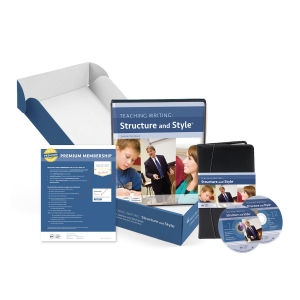
A few months ago, we were blessed by the Institute for Excellence in Writing (IEW) with a plethora of amazing products.  This Deluxe Combo Teacher/Student Writing Package Level B with Fix It 1 & 2, Plus, A Word Write Now and Portable Walls, which targets grades 6-8, has kept us busy, but in a good way.

Because there is so much to this amazing package, let me first start with the basics of what each component is.

Teaching Writing-Style and Structure (TWSS)- This is just for the instructor. Mr. Pudewa, the instructor for the course, has been filmed teaching the "teacher" how to use the program. The first thing you will hear in the 12 disk set is the reasoning behind the system and how it works. Then Mr. Pudewa walks through each of the 9 units. There are three additional disks that show you examples of students' work. The premium subscription included in this set also gives you access to video streaming and additional e-resources. The notebook included contains the syllabus and other materials needed such as word lists and stories used.

Student Writing Intensive- This is where the rubber hits the road. This 3 ring binder and the accompanying 4 disk set teaches your student how to write. The binder comes with 5 tabs and the needed resources to get you started. The child watches a DVD and is directed by Mr. Pudewa on the assignment for the day. Most days do begin with watching a segment of the lecture, but some days are just built in practice days. You can use this program from 15 to 30 weeks, depending on how quickly your child is able to work through it successfully.


Units include-
Note Making and Outlines
Writing From Notes
Retelling Narrative Stories
Summarizing a Reference
Writing From Pictures
Summarizing Multiple References
Inventive Writing
Formal Essay Models
Formal Critique

Your child will also cover concepts Mr. Pudewa calls "Stylistic Techniques," such as the "who/which" clause, very short sentences (VSS), and the "because" clause, as well as learning to replace weak verbs and adjectives.


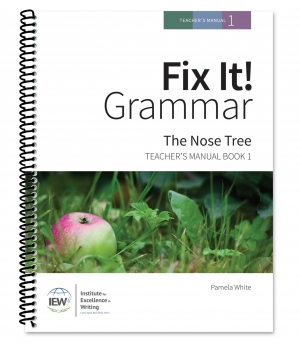
Fix It 1 & 2-  Consider this the new way to conquer grammar. Two student books (downloadable in our case, but also available in hard copy) take you through a story one line per day. Each day you have several things to do. On day one you are taught a new grammar component, such as verbs or adjectives. You then read the assigned sentence and identify the vocabulary word in bold print. You are asked to write that word in your notebook with the proper definition. Next, with the guidance of the teacher, your student will mark the passage, identifying specific words as directed and "fixing" any mistakes found. The sentence is then rewritten in a notebook. On days 2-4 the student defines a new word, corrects the next sentence, and rewrites it in the notebook, thus copying the story one line at a time. By the time you finish the program, a complete story has been handwritten by your child and they have a separate "dictionary" in their notebook. Fix It! also comes with a Teacher's Manual for each book that has all of the answers in it as well as teacher's notes and hints. For quick reference, you can also print out Grammar Cards that cover each new concept learned. Each of the two books you receive will take you through one year of intermediate grammar at this level. There are placement tests online to help you determine which book you should begin with. Book 1 is titled The Nose Tree and Book 2 is titled Robin Hood!


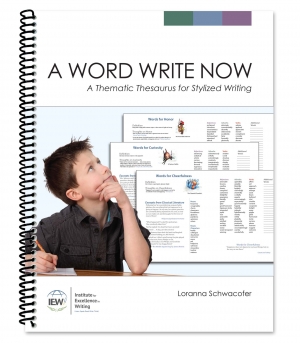
A Word Write Now-  This little gem is a themed thesaurus for your child to use while writing. Word lists are categorized into various themes, making it easy for your child to choose a word without the drudgery of pouring through a dictionary. Themes include the senses, words for envy, gossip, hostility, and more. Each page has the definition of the word and uses several quotes from famous people about that word. In addition, there are several quotes from classical literature that show the word in action. Each word also has synonyms listed in groups- Nouns, Adjectives, Adverbs, and Verbs, in addition to having space to write any additional words the student might want to add.


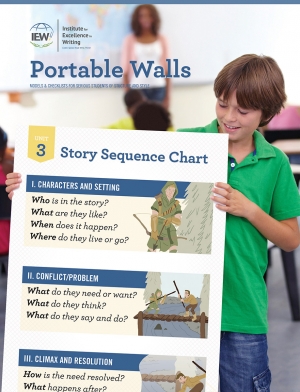
Portable Walls- Once upon a time you could order these huge wall charts that are used frequently in the IEW program for your "classroom." Charts include banned words, -ly words and more. Now, there is a new option of having these charts right at your child's fingertips in a tri-fold 8x11 fashion. Each chart is intended to help a child quickly reference a concept taught so they can spend their time in writing rather than stumbling through dictionaries and their notes.


How we are using this program
One week at a time! Seriously! Mr. Peudewa has kindly provided an amazing schedule for you to follow that I highly recommend. Each day tells you which portion of the SWI disk to watch and then what assignment to work on. Since I am teaching only one student, we do tend to work fewer days on the writing and correcting portions. I will also move forward after just one exercise if I feel my son has a good grasp on the concept, though in many cases several are available to use. This happened quite frequently in the beginning chapters and less so on the later ones, due to his age and prior experience with IEW. Before we begin each of the 9 units, I watch the corresponding DVD from the TWSS component. This helps me see what is coming, to know how to direct my son better, and what to look for as far as potential problems or scenarios.
The Fix It! program is designed to be used four days a week, which we found to be schedule friendly since we tend to do a lighter school load on Fridays.


IEW Review

What we love about this program-
  • TWSS- While you CAN teach this program without ever having seen these disks, I strongly recommend you do not. I taught my two older children just using the student portion of the program years ago. However, this time around and teaching my 7th grade son, I watched the videos and got so much more out of the program. Let's just say there were a lot of a-ha! moments.
  • Sequential steps- Writing can overwhelm even the best of students. By breaking up the steps into smaller bites, from the key word outlines to eventually writing large reports, students are less likely to be overwhelmed to the point of frustration.
  • All inclusive- Between what is included in the binders and the files you can access in the premium subscription, everything you need to teach this course is included. While you are welcome to use outside sources to find stories, there is no need to.
  • Humor- Hear me say this - this is not your ordinary boring writing program. Mr. Pudewa is a "trip" as my kiddos will tell you. He makes learning fun and keeps the students giggling with his zany comments and entertaining stories. Even my 7 year old likes watching him and asks that we not watch the videos without him.
  • Ease of use- I am a lesson plan gal, I admit it. I like it when someone tells me exactly what to do and when. That is exactly what you will find in the teacher's notes. Each lesson outlines what to watch (down to the disk timing), what handouts to use, what will be taught in each lesson, and provides composition checklists to assist you in grading. Student samples are also included.

  • New Portable Walls- I loved having beautiful charts all over our past homeschool rooms, but let's face it, not many of us have that option, so this new format is a life and space saver!
  • Fix It!- I wasn't sure about this program at first, but I have to admit that it is a neat program. It was quick enough to not bore my son and was a good solid method for teaching grammar, proving that diagramming sentences is not the only way to learn! Thank goodness!

  • A Word Write Now- This is ingenious. I love that it is so thorough and can be used by students of multiple ages for years to come. It is simply a great resource for any student.

If you are looking for a strong writing program to not only teach your child to write, but to inspire them to be the best writer they can be, I highly recommend this program. They will not only learn invaluable skills, but have a little fun along the way. Who could ask for more?!


IEW Review

Crew Disclaimer

Wednesday, July 9, 2014

WriteShop- TOS Crew Review

Do you teach writing in your house?  For us it is a subject that, in the past, I have pushed off until middle school and beyond.  Other subjects took precedence and quite frankly, I just did not enjoy teaching it.


Last year I was introduced to 
WriteShop and all of that changed.  Actually, I had the privilege to review WriteShop Junior Level D for my older son and liked it so much, I went back and bought Level A for my then 6 year-old.  We used it last year and loved it. 

For the past few months I have been reviewing  WriteShop Primary: Book B Set for 1st and 2nd graders, as well as reluctant 3rd graders and guess what?  Love it as well!  The set includes the Teacher's Guide as well as an Activity Set Worksheet Pack.
WriteShop Review

WriteShop is a unit style writing program for grades K-6th grade.  Beginning with Level A and continuing on through Level E, it teaches writing in a fun and non-threatening way.  Using a combination of parent-led writing and moving on to student-led writing, WriteShop engages kids with writing prompts, a fun worksheet per unit, and additional activities and game ideas.

Dividing each unit in to 8 "days," WriteShop provides lesson plans for a 3 day a week, covering one lesson every three weeks, or 4 day a week schedule, covering a lesson every two weeks.  There is a schedule that allows you to complete a lesson in one week, but it is recommended only for very fast paced or motivated 3rd or 4th graders.

Here's how the days break down -

Activity 1- Introduction of the unit theme and the worksheet
Activity 2- Reading of a picture book and pre-writing activities
Activity 3- Brainstorming and organizing ideas
Activity 4- Creating a story using the skills learned
Activity 5- Editing and Revising
Activity 6- Guided writing practice
Activity 7- Publishing your project
Activity 8- Evaluating your child's work and a "want to do more" day which provides additional ideas and projects

Themes for Level B include:

Writing a letter
Standard Spelling
Acrostics
Poems and Nursery Rhymes
Fairy Tales
In the News
Humor
Problem and Solution
Character and Setting
Story Organizers


How we used WriteShop Primary: Book B  We have been using WriteShop Level B for our newly turned 7 year old, who will be beginning 2nd grade in August.  We chose to do four lessons a week, covering a unit every two weeks.  This gives us Fridays off, or just provides a built-in extra few days in case we decide we need more time to write.  That has happened! 

What we think -  As I mentioned earlier, we really do love WriteShop.  I love the friendly approach that makes writing fun.  No extra fluff here! Writing is the goal, and you do a lot of it.  Each day begins with guided writing, where the teacher does most of the writing.  When we start off the week and I am doing the writing for CJ, he is relaxed and able to just concentrate on his work.  By me writing for him, his ideas flow! Sometimes extensively!  He also likes the brainstorming days, again because I am writing for him and he is free to be creative without being bound to what he can spell or how fast he can write.  We ease into him writing his story by the end of the first week and by the end of the second he is doing his stories all on his own.  

One of the other things I really like about WriteShop is that has a scripted example on several days of what should take place.  While our conversations never look quite like theirs, it is often a big help to me just to get us started.  In addition, within the teacher's guide there is information on creating a writing center and an extensive section on teaching the lessons.  If this is your first time teaching WriteShop, this is a MUST READ section.  It has many helpful hints that you will need to know.  Also tucked into the pages of the teacher's guide are "parents say..." sections - little quotes and ideas from other parents who have used the program and variations they have used with success.  If any advanced preparation is required on your part, that information is in a highlighted box at the beginning of each lesson.

Two of the things that CJ likes best is the worksheets, which says a lot, and the creative ideas.  Making word families on flowers is more fun that just making a list!  Another technique we have used a lot is making a word bank before he writes.


front of worksheets

back of worksheets


Writing his Acrostic on a pillowcase was just more fun!  He looks forward to project days the most.


When we used the program last year he enjoyed the publishing part of the week the best.  This year I have found that that is not as big of a deal, but if you have a kid that loves to share their work with other family members, ideas like making a holiday party favor with your child's poem or making a basket of "story loaves" will be sure to bring them joy.

Overall, I have no hesitancy in highly recommending WriteShop for your beginner writers.  It is a good, solid writing program that I think will give your student a head start with writing.  We will continue to use it through each level!


Prices- 
WriteShop Primary: Book B Set-$35.95

You can find WriteShop here-
Facebook: https://www.facebook.com/writeshop 
Twitter: https://www.twitter.com/writeshop
Pinterest: http://www.pinterest.com/writeshop/boards/
Instagram: http://instagram.com/kimkautzer 
Google+: https://plus.google.com/+Writeshop/ 

Click to read Crew Reviews
Crew Disclaimer

Monday, January 6, 2014

VCF- The Power in a Word


You know how some people are a little obsessed with office supplies?  You know- the type that shop all of the back to school sales even though they KNOW they have enough pens for the free world and just as many notebooks.  OK, yes, I am one of those people.  I admit it.  As long as we are confessing, I also admit I am a curriculum junkie as well.  You know- buy it in case you may need it and then make your children use it in the summer even if they are out of the age range.  Yep, I am that person too.  But when is the last time I went to a curriculum fair?  YEARS!  Really, my kids were all probably still in elementary school at the time, meaning there were only two of them then, not four.  It was actually a local homeschool convention, but let's just be honest, I went for the curriculum.  I may have listened to one or two speakers, but I stalked the vendors.

Curriculum speaks to me.  It is one of the reasons I do reviews.  So much curriculum, so little time!
And that my friends, is why I love Susan's idea of a Virtual Curriculum Fair.  I do not have to leave the house and I can stalk everyone else's curriculum choices.  Win-win for me!  So let's get started!

I do find it amusing that Susan decided to start with what I consider the hardest category- Language Arts.  It really has been the hardest for me to choose and folks, I have been on this ride over 15 years.  I have been there, done that with more stuff than I even care to admit.  Let me say, I do not think I am fickle, but I am choosy.  And, I have learned that each of my children learn a different way and so with each one I have to think outside the box a little to find the "perfect" match.  There is NO such thing, by the way.  Sometimes you just find the best choice for the moment and move forward.

That being said, let me share some of what I consider the best out there!  For now.

Let's start with spelling.
I am NOT a five days a week, pretest, post test spelling curriculum fan.  I have used several and had no luck.  I do not like for my children to spend a week studying words they know how to spell, while doing mindless word searches and other time wasters. (not opinionated at all, huh?!)  So here is what I suggest-
All About Spelling- This is new to me with my last child.  Figures!  It is hands on, easy to follow and genius!  My 1st grader has just started level 2 and we will plan on doing level three for his second grade level.
Spelling Power- This one we have been using since my oldest was in elementary school.  I am sure the format has changed a bit, but the bottom line is that you call words until your child misses a few and then they study those words.  There is a little more to it, but you get the idea.  One book, all grades, period.  I would start it in third grade and finish when your child has completed all the levels.

Reading
Two of my kids learned to read magically.  OK, I know not possible, but it sure seemed like it!  One I am proud to say is NOW a great reader but was at one point in time, hopeless.  Our last blows me away daily with his reading.  We have tried everything but if I was starting over here's what I would do.


PAL from IEW.  This was a review item and by far, hands down the BEST thing we have ever used.  Again, only with my youngest.  Again, figures!  I have no doubt this kid would have learned to read regardless, but we would have never had this much fun!  Hands on, active and, did I mention, fun?!    If you have a child that likes to be busy, they will enjoy this.  There is some writing involved, but also lots of games and activities.  The initial prep time is hefty, but worth it.  Start here and you will not be sorry!


Two "extras"- Reading Eggs and Reading Kingdom.  Both are computer based, both make reading fun.  If you have a visual or auditory learner, these may be worth checking out.  We use them daily.

Literature
OK, I am going out on a limb here- but after your child learns to read, can I suggest that is just what you do?  Read. And read some more.  Talk about what you read, notebook if you want, but I am here to tell you that all the extra fluff does not help your child to read.  It just takes up precious time that could be spent reading!  If you are worried about comprehension, after they are finished reading - TALK about the book!  Ask questions, discuss.  Not only will you know if they are comprehending what they read, you are spending quality time with your kiddos.  Here's what I figured out about Literature- every program out there recommends your child read something different.  Every public school out there is the same.  And some of those choices are HORRIBLE!  So my recommendation is find what YOU want them to read and have them read!  Make a list at the beginning of each school year and dive in.  It's more fun anyway.


Writing
For beginner readers, I love Write Shop!  Again, this was a review item that we were blessed to use with my then 5th grader.  As soon as we were done I bought the first book for my youngest.  It is simple to use, inexpensive and just well done in my opinion.  We will continue with it probably until about 5th grade.  The first level has simple writing pages you use with each lesson and some cute activities.  The older level we used incorporated more games and grammar components as well.


At that point (6th grade) I switch to IEW.  If you do not know about this company, you need to do some research about them!  My kids love Mr. Pudewa and his humor.  The videos are invaluable, and the skills taught are wonderful.  My college student has been complemented for her writing by numerous professors, and trust me, she did NOT learn any of it from me.

Two "extras"-  You know, for those summer school times...heehee
1. One Year Adventure Novel
We have used both and I highly recommend them!

And that brings us to Grammar!
Ugh!  This one is just tough.  We tend to hit Grammar hard in the middle school years and then move on.  I am just gonna lay a few out for you and when you find the "great"one, please come back and share.
Logic of English- A newer one that I recently reviewed.  A little over my youngest's head but I think it may be what we try for next year. (2nd grade)  They also have a lower level called Foundations that I hear good things about.
Analytical Grammar- If you like some diagramming this might be a good program for you.
All in One Grammar- This is just a little workbook that does a solid overview of basic Grammar.  I really like its simplicity and use it in 4th grade.
Bridgeway English.- very workbooky (my made up word) but we have had good success with it.

Wow, is that all?  You forget all that is covered in language arts, don't ya?  No wonder it is such a hard subject to find.  I know there are several all in one programs out there, several which we have used, but I have found that because I am so particular, mixing and matching in this category works best for us.

Homeschooling Hearts & Minds


Confused or still not sure what to do?  Head on over to these other VCF participants and see what they recommend! Remember, in the end, no one knows your child like you do!  Don't be afraid to try something new and move on to something else if you need to.


3 Reasons to Read to Your Teens by Susan @ Homeschooling Hearts & Minds
Language Arts {Virtual Curriculum Fair} by Chareen @ Every Bed of Roses
A Classical Take on 6th Grade Language Arts by Christy @ Unexpected Homeschool
The Power in a Word by Michele@ Family, Faith and Fridays
The Latin Road to English Grammar Volume 1 by Kristi K. @ The Potter's Hand Academy
Starting a Foreign Language in Elementary School by Amy @ Eclectic Homeschooling
These are the words we say by Christa @ Fairfield Corner Academy
A Peek into our Homeschool: Language Arts by Brittney @ Mom's Heart
Our Curriculum Choices 2014 ~ English by Renata~Sunnyside Farm Fun
Virtual Curriculum Fair: A World of Words by Joelle @ Homeschooling for His Glory
It Starts with the Alphabet by Kristen @ Sunrise to Sunset
Playing w/ Words-Charlotte Mason Style by Lynn P @ Ladybug Chronicles
2014 Virtual Curriculum Fair ~ Playing with Words: the Language Arts by Jennifer @ a glimpse of our life
Our PreK-1st Grade Language Arts Mix by Tauna @ Proverbial Homemaker
Fun (or Not) With Spelling by Nicole @ Schooling in the Sun
Word Nerd Love by Lisa N@Golden Grasses
Our Favourite Resources For Teaching Elementary Language Arts by Kim @ Homestead Acres
Unconventional Reading Lessons While Homeschooling by Lori@My Journeys Through Life
My Favorite Writing Curriculum for our Boys by Monique @Living Life and Learning
Virtual Curriculum Fair: Playing With Words - Language Arts  by Stacie @Super Mommy To The Rescue
Fun With the Language Arts by Mary @ Winecup Christian Homeschool
Our Grammar Path by Laura @ Four Little Penguins
Virtual Curriculum Fair !!! by Jessica @ Modest Mama
Creating a High School English Course (or two) by Debra @Footprints in the Butter
Language Arts in Our Homeschool This Year by Laura @ Day by Day in Our World

If you would like to link up a curriculum post we would love to have you join us!


Join us next Monday when we talk about the next VCF subject- Math and Science

Blessings,


*** Just a quick note.  I am not receiving any compensation for recommending these products.  All mentioned are my personal opinions only.  I added some links just to make it easy for you and linked reviews I have done in the past if you want more information.***

Monday, September 9, 2013

TOS CREW Review- Logic of English

 
Reading, Writing, Spelling, Grammar
These are the subjects that can take up much of a homeschooler's day.  They are also the subjects we have had the hardest time teaching.  Not that the actual teaching has been difficult, but certainly finding a good solid program for each of them has been.  That is why I was excited to try out Logic of English.  Logic of English takes all four of those- reading, writing, spelling AND grammar, and puts them into an open and go curriculum aimed at teaching from the ground level up.

 photo LOE_logo_wide_inv_3d_70_zpsc2eceeb2.png

Their program Essentials,  designed for ages 7 to adult, contains 40 lessons and teachies 74 basic phonograms and 40 spelling rules, introducing the 480 most frequently used words and then variations of them by adding prefixes, suffixes and making compound words.
This is what we received for this review:
Essentials Teacher's Manuel ($95.00)
Essentials Manuscript workbook ($25.00) (also available in cursive)
Phonogram Flash cards ($18.00)
Phonogram and Spelling Game Book ($15.00)
Phonogram Game Cards ($10.00)
Spelling Rule Flash Cards ($15.00)
Phonic with Phonograms App

At first glance, I must admit I was a bit overwhelmed.  There is quite a bit of introductory reading to do for you the teacher to explain the what, how and whys of teaching this way.  But, once I got past that initial reading, we were on our way with ease.  Each lesson is scripted with exactly what to say and is broken down into three sections.
Part 1- Phonograms, Exploring Sounds, and Spelling Rules
For each lesson, new phonograms are learned and old ones practiced.  This is where the flash cards come in.   You show the child the letter and then they can tell you the sounds that particular letter makes. Pretty easy until you get to letters like e or combinations like ai that have numerous sounds.  Luckily, on the back of each flashcard are all the sounds and words giving examples.  It is also usually at this time that you can play a game.  No surprise that this is the part my son liked the best, right?   Luckily for you the parent they are fun games like Sound Bingo, Old Dragon (like Old Maid using the letter sounds), and Rotten Egg.  The Game book is loaded with other games that are activity based  for your active children, sensory ideas for tactile learners, spelling games and more, as well as the templates needed for the games.  It was our most used book and I think essential to the program!  Part 1 also has you explore sounds, teaching some neat ways to practice sounds and make sure kids were saying them correctly.  There are corresponding workbook pages to go along with each activity.


Part 2- Dictation (spelling test)
In this part 15 spelling words are introduced and tested.  A worksheet is provided for the tests.
Part 3-Dictation, Composition, Grammar and Vocabulary Development
In this section  grammar and spelling rules are worked on, as well as dictation of phrases or sentences and composition.  Composition starts off fairly easy with writing six phrases in the workbook and advances to harder assignments.   Vocabulary development adds elements like suffixes, prefixes, compound words, homophones and such.  Again, workbook pages are provided for each written activity.

That's it!  Repeat the same three sections for each of the 40 lessons and you have it.

So let me talk to you about a few things-

This program is amazing.  It is one of the best laid out programs I have seen that combines so many elements together.  And scripted!  Who doesn't like scripted?  Other than literature, this IS your Language arts program.  So do not be surprised that it takes some time to get through a lesson.  Because, it takes some time!  Not because it is hard, but simply because there is just so much there.  The good news is that the publishers have carefully laid out a suggested schedule for 4 different levels that you can choose from, starting with 8 year old and struggling adults in which you teach one lesson every 1-2 days to 5 year olds in which you teach a lesson every two weeks.  Wherever your learning or struggling reader falls, you will find just the right pace for him or her.

How did it work for us-
Because of the time involved in the lessons and the fact that my son is a young 6 year old, we found we could only do a section per day.  More than that and he just could not sit still long enough to be productive. So we did section 1 on the first day and section 2 the second day.  He did well with both of those days and surprised me at the level of spelling words he could spell. Those are not easy words friends!


Note- Logic of English also has a program for Kindergarten through first grade called Foundations  focused on beginner readers.  Since my son is a strong reader for his age, we decided to skip to this level.

About day 3...not there yet!  The grammar lessons were just above his level for now.  I do not think he will have any problem next year but right now his 6 year old brain just could not get many of the concepts.    Let's face it though, that is the beauty of homeschooling.  We can take what we need and use it to the best of our ability and also know our child well enough to know when it is time to call uncle.  This was one of  those times for us.  Reading and spelling he was ready for, mechanics of grammar will just have to wait until next year.  You can bet this is the book we will be using when he is ready though.

Our favorite part, again, were the games.  I have finally come to a place in my homeschool career that I think learning with games is the way to go.  Seriously.  Our kids will have enough sitting at a desk to last them a lifetime.  If I can find a fun way to learn then I am all for it.  After all, it always seems to be that information that my son retains the most.  If it works, why not?!


Another neat aspect of this program is their phonograms app.  AS I have mentioned before  I fought allowing my kids to use my ipad, but have since given in when I found there were GOOD, quality apps out there to use.  This is one of those!  Since I never learned all of the sounds each letter makes, and still have to stop and think about some, this app was great for us.  Both CJ and I learned new sounds together and it made it much easier to study once you had heard them taught by someone else.  This is not an app in fancy game form, but truly a learning app that have levels of words  to study.  Regardless, CJ enjoyed using it and got very excited when he mastered a level.  I highly recommend you not leave out this aspect of the program.

 photo PhonoApp_iPadPlayScreen_assembled_400_zps917b1955.jpg

So yes, this family has had great success with Logic of English's Essentials program and highly recommends it for your emerging readers or those who need just a little more help.  Fellow CREW members reviewed other programs, so I encourage you to click on the banner below to read about their experiences as well!


Photobucket

Monday, April 29, 2013

TOS CREW Review- Writing Fiction (In High School)

 photo banner2_zps845837ad.jpg

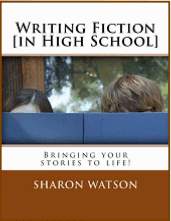
Writing can be fun.  Teaching kids to write...not so much.  So we jumped at the chance to review Writing Fiction (In High School) by publisher Writing With Sharon Watson!  Designed for grades 9th -12th, this program is intended to teach your high schoolers to write fictional short stories and novels in the span of a year.  Sharon includes two tracks for the curriculum.  One is for all writers at any level.  The second track is for those who have already written a manuscript.  These additional activities are scattered throughout the lessons.  While it is recommended that the best way to complete this course is within a group setting, we found it was not completely necessary. 


 photo obj383geo450pg9p9_zpsb5b67bce.pngHow we used this program-  We were given the student workbook, over 300 pages, as well as the teacher's guide to use for our review.  The student's workbook is written in an conversational tone, and easily read by just the student, so that's what we did!  My daughter, a 9th grader, would read a lesson per day.  Then, before doing any of the assigned work, we would use the discussion questions in the teacher's guide to guide our conversation together.  Depending on the assignment, we would either do things orally or sometimes in a notebook, depending on her interest.  My daughter has spent this past year writing her first novel, so the assignments that centered around her returning to that manuscript for additional work interested her greatly.  There were days that one lesson took a considerable amount of time to complete and others that we were able to work through several lessons at one time.

My Thoughts-  I really do like this program!  A lot!  It is very thorough, but not difficult to follow.  The lessons are broken into manageable sizes and are filled with all kinds of practical assignments.  One of our favorites so far has been a very early assignment that had the student write a story using a letter of the alphabet, in order, to begin each sentence.  We put a little spin on it by setting a time limit and both my daughter and myself writing at the same time.  Not only did we have fun reading our finished works to each other, but then later to our family during our nightly family time.
Here is a quick look at what she started with in a two minute limit-
A lion stared at me through the bars.
Baring his teeth he growled fiercely.
Catherine laughed, "I don't think he likes you!"
"Darn, I d hoped he'd like me," I replied.
Either way, working with him was my new job. 

One of the other things that stands out for me in this program is the teacher's guide.  It is well organized and gives lots of helps, especially in ideas to help prompt your student(s) in their thought process.  It does not just leave you hanging, which I have found that many writing programs tend to do.  I do think that this would be an amazing program to use with a group, so that they could discuss, critique, and encourage each other, but we did do just fine with our two way discussions as well!

The Teen Writer's Thoughts-
I've done a lot of writing programs. A lot. Writing Fiction has definitely been one of my top favorites. One of the things I liked was Mrs. Watson's approach to the subject of writing fiction. She's straightforward, but informational. Her writing style is not terribly formal, so I didn't feel like reading the sections was a chore. I enjoyed it. I love how Mrs. Watson uses a lot of examples from YA Fiction. Some of the books I had read, and some of them I hadn't.
The Last Book in the Universe is read along with the program (I think you have to have it finished by Chapter 4) I liked it so much that I read it in one day. It's about a kid named Spaz and it's an interesting take on the dystopian novel. I liked the characters and honestly wanted them to succeed.
I've learned a lot from this program. I will continue to use it :)

Chapter lessons include-
Facts About Fiction
Point of View
Fairy Tales
Characters and Characterization
Conflict
Dialogue
Description
Words, Words, Words
Theme
Plot
Scenes
Beginnings and Endings
Getting Published

There is a list of movies that are referenced in the curriculum to watch, as well as a few books.  We were able to get a used copy of The Last Book in the Universe from Amazon, though I am sure many libraries carry it as well.

Price-
Student workbook- $25.05
Teacher's guide- $9.95

 The Final Word- In my opinion, this is an amazing program at an unbelievable price!  After using this program, I will be eager to start another one that Mrs. Watson has to offer!

Photobucket

 photo DisclaimerGraphic1_zpsf612f371.gif

Monday, March 18, 2013

CREW REVIEW- The Essentials of Writing

 
Essentials in Writing is a complete language arts curriculum, with an emphasis on composition, taught by former teacher, now homeschooling father, Matthew Stephens.  Offering levels from first to twelfth  grade, we had the opportunity to review the 5th grade level which includes 2 lesson CDs. With each level you order, an email will be sent to you with a PDF file for access to the printable workbook.  If you prefer you can order a pre-printed workbook instead.  Essentials in Writing is divided into two pretty distinct parts, the first 34 lessons concentrating on Grammar, and the following lessons focusing on the writing process.
 
Essentials in Writing Grade 5 photo EIW5thgrade_zpsbb95ceb8.jpg
This was an easy product to review.  Because of the CD format, you just pop it in and click the lesson you are on.  At this 5th grade level, each lesson is only a few minutes long so as not to overwhelm the student with too much information at once.  Following the lesson there is a corresponding worksheet for your student to complete.  Answer keys are included in the printable files.  
 
For the purpose of the review we did a few sections of each part of the program.  The grammar part is pretty standard, with Mr. Stephens reviewing parts of speech and sentence structure.  These lessons are fairly short and on occasion we did several at one time.  Once we started into the writing portion of the program we did slow down to one lesson per day.  Each writing assignment is broken down into sections to include: Organizing Thoughts, Draft, Revising, and Edit/Publishing.  At the end of each writing assignment you will find a checklist to help your child and yourself as the teacher evaluate the work done.  Topics we encountered were-
 
Narratives
Descriptive Writing
Friendly Letters/Invitations
Persuasive writing,
 Comparing/Contrast
Summary Writing
Informational Reports (including how to write a Bibliography)
Figurative Language
and
Poetry
 
While most can be completed in a week or so, the Informational Report is more detailed and thus will take more time to complete. 
 
Our Thoughts-
Unlike my older girls, my 5th grade son has not had the opportunity to do any classes with this type of video instruction with a teacher.  One of the things that drew me to the program, quite honestly, was that the teacher was a male.  I think that all too often our boys never get to see a male teacher, and I liked that Mr. Stephens provided us that opportunity.  The short lessons were a plus for us as they did not drag on and on.  With his humor and laid back approach to teaching, Mr. Stephens kept my 5th grader engaged and interested.  While writing is not his favorite nor his strength, he did do the lessons with minimal moaning, the persuasive paragraph being his favorite so far.  Each lesson is presented step by step with each step being modeled on a whiteboard, so you get that true classroom feel.  Mr. Stephens does interact with students, but you never see them.  Another part we liked about this program was the fact that the worksheets were self explanatory.  Often, my son and I worked together, but this is a program that could be done by a student at this age independently with no problems.  It is quite simple- watch the video lesson, complete the worksheet.
 
Negatives?
Not really.  A few times "last year" was mentioned and I worried that we might be missing something, but never did we find that it hampered our ability to understand a concept.  Because my son is 11, I do think he could have easily kept up with the next grade level, especially in the grammar portion.  Make sure you review the topics covered in each level when making your grade choice.  If in doubt, I would say go to the higher level.
 
I have to say, for the low cost and comprehensive content, this is a writing program I anticipate us using for years to come!
 
Pricing-
Essentials In Writing, 5th Grade- $40.00
Pre- printed workbook- $20.00
 
 
Photobucket
 
 
Disclaimer: I received a free copy of this product through the Schoolhouse Review Crew in exchange for my honest review. I was not required to write a positive review nor was I compensated in any other way. All opinions I have expressed are my own or those of my family. I am disclosing this in accordance with the FTC Regulations.
 

Wednesday, November 7, 2012

CREW Review- IEW- PAL


Primary Arts of Language, or PAL, is a two part program consisting of a Writing Program and a Reading Program, with a bonus Spelling Program on the side.  Created by Jill Pike for the Institute of Excellence in Writing, or IEW, this amazing program is designed to teach kids K-2nd grade how to read, write and spell while having fun.  Here is what you will see when you open the box after ordering the two programs-
 
 
At first glance one could get easily overwhelmed.  I did!  Let me suggest that the first thing you do is pop in the DVD for both programs, sit back and relax while Jill takes you through the ins and outs of the program!  Now, you will feel so much more relaxed and confident, I promise!
 
Here's how it works in a condensed version-
Before you get started you will need to put together the file folder games.  You can do this as you come to each one in the lesson plans, but I suggest you just sit down one night and blast through them.  All of the supplies are given to you in the reading package, you will just need to supply the file folders to put them together.  It does take a little time, but these are the heart of the program so don't skip this step!  Now you are ready to begin!
Starting with Lesson One in the Reading Manual you begin with Poetry. Here you will be instructed to read the first poem and discuss.  If there are extra activities to do, they are discussed in the lesson plan.  New poems are introduced every few weeks.
 
Then you will be instructed to do your Class Journal, Printing and Story Time.  This is where you will jump over to the Writing Lesson plan, which will give you specific instructions for what to do now.  Each day you and your child will write in a class journal, practice letter writing and eventually write words, first on a white board, then on sheets provided and eventually on lined paper.  You end this time by reading a story.  (The stories to read are even included in the first 8 lessons.)  After the story you talk about who was in the story, what happened and how it ended (the clincher).  For those of you familiar with IEW, these are steps that will be followed up on in the higher levels of IEW programs.


Now you hop back to the reading lesson plans!  Here you will find yourself in three different stages, depending on how far you are into the lessons.
 
Stage 1- Foundations and reader words- This is where your child learns letters, sounds and new sight words using the folder games you put together, as well as practices writing their letters and numbers.
 
 
Learning vowels with little people!
 
 
This is the game Mugs.  Letters are written on the bones, and when your child says the sound the letter makes, he then feeds the bone to the dog.  One of CJ's favorites!

 
This is a variation of the card game, in which you teach several sight words a day.  Once you can say the word you get to feed the monster.  Again, one of CJ's favorites!  Another suggested activity with the sight words is games of lightening.  We also made sentences with the sight words and played war with the sight words. 
 
 
And yes, he did come up with the sentence Colby is brown, though later he thought it was funnier to make the sentence Colby is purple!

Another one of our favorite games is Match It.  Here you work on sight words in a memory game fashion.  There are new packs of words to add every so often.

 
I could go on and on about the folder games since my active child really loved this part of the program but I will leave you with just one more- Action Charades.  This game teaches, you guessed it, action words.  We would take turns picking a word, reading it, and the acting it out.  With words like run, jump, hop and fly you can see why it was a favorite.
 
 
Stage 2 introduces Activity Time.  This is a goal your child works towards so they can earn the privilege to choose the folder games they would like to play and then play for 30 minutes.  This is a fun time that siblings can be included in the fun or your child can work alone. 
 
Stage 3, which we have not gotten to yet, is Discovery Time, when you can drop the folder games for 30 minutes and instead work on word packs containing more sight words, but at higher levels
.
Stage 4 is Library Time.  Once your child has mastered the word packs they are ready to choose from books you have collected to read on their own.
 
After this learning time, regardless of what stage you are in, you have Phonetic Farm Time.
As you can see in the picture below, this is a folder in which you add stickers to a farm picture representing the sounds you are learning.  To reinforce the sounds you can play a knock-knock game in which you and the child take turns knocking on the sound, asking "who's there" and then saying the sound and associated words.  For whatever reason, this was also a favorite of CJ's and really helped him learn the "helper letters".
Finally comes the Agenda or Work Period.  This is the time that your child completes a page from their workbook.  You can make a chart for this time that has words or pictures telling your child what they must do for the day- creating the habit of working on their own and checking off what they have accomplished, to include not only school related items but any chores or activities you want to add.


There are a few End of The Day notes for anything you need to finish doing or review.
 
Whew!  YOU ARE DONE FOR THE DAY!  Tired?  Actually, after the first day, I was exhausted.  But once we got into a schedule we were on a roll.  One of the key notes that Jill teaches is to make each section short and snappy. The activities should be quick and fun to help keep the child's attention.  I think that this is what made this program so successful for us!
 
A few side notes-
*Another goal your child has is to earn readers along the way.  These are included on the CDs you get and can be printed out.  Once your child has learned the words for a specific reader, they are REWARDED with that reader.
 
 
This was a BIG THING in our house!!  CJ was so excited to get his reader and then read all seven chapters to us.  After we all finished jumping up and down and cheering, he sat down by himself to read it again.  28 pages!  (think Dick and Jane type story, of course)  Anyway, he is already asking when he will be ready to earn his next reader.
*There are 80 lessons total.  This does not compute to 80 days necessarily.  If your child knows letters and their sounds you may be able to skip ahead of some lessons or double up.  If you have a struggling reader, there may be times when you need to slow things down a bit.  Make the program work for you!
*Throughout the lesson plans are notes, notes and more notes from Jill.  READ THEM!  It is like having her peeking over your shoulder saying "think about this", "try this", "what about this?".  They are all very helpful.
*This program takes some time- we spend sometimes over an hour or so doing it.  I will say that the time flies by because we are actively engaged and having fun.


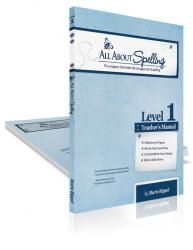
The other component of PAL, is All About Spelling.  It is introduced later in the lessons, so I have not had the opportunity to use it with CJ yet.  However, I have started using it with my 10 year old in the last two weeks.  After reading through the program and talking with some friends who have used it, I was encouraged that it might help us correct some issues that have led my son to be a pretty lousy speller.  Because he is a fluent reader, we are flying through the steps quickly, but with each new step he completes, we both have learned some new-to-us spelling rules and hopefully are on our way to having a better speller.  I love that the program uses techniques that appeal to the auditory, visual and kinetic learner- it does seem to be making a positive difference and I am looking forward to using it with CJ.


SOOOOOOOOOOOOO...do we love this?  YES!  Do we think you should go right out and buy it?  YES!  There is just not one negative I have to say so far  about this program.  Really!


I HIGHLY recommend that if you are interested in this program you take an hour and watch the webinar that Jill presents on the program!  It is a great way to get started without feeling so overwhelmed at first.

The complete Reading Package can be ordered for $69.00, while the complete Writing Package can be bought for $89.00.  The reading package contains the teachers manual and DVD, as well as the folder games and Phonetic Farm folder.  The writing program will come with the teacher's manual and DVD, as well as All About Spelling, Level 1 Manual and interactive kit.  Both DVDs not only include Jill's overview of the programs, but also several MP3 audio presentations well worth listening to.


To see what fellow CREW members had to say about PAL, just click on the banner below!


Photobucket
 
Disclaimer- Our family receive the complete PAL program in exchange for our honest review of the product.  Opinions expressed are our own and were not influenced by the company in any way.